




By 2050, the world will need to produce 70 percent more food than it does today, according to the Food and Agriculture Organization of the United Nations. Canada is one of the countries the world is counting on to deliver it. Meeting that expectation sustainably, season after season, depends on the health of Canadian soils and the efficiency of the inputs that sustain them. Increasingly, the science is pointing to a nutrient that has been quietly overlooked for decades: sulphur.
Sulphur is the fourth macronutrient crops need to thrive, a classification recognized by The Sulphur Institute, a global authority on sulphur in agriculture, which identifies sulphur deficiency as one of the most under diagnosed yield-limiting factors in modern cropping systems. Yet as atmospheric sulphur deposition has declined sharply over the past four decades— a consequence of cleaner air regulations across North America and Europe — he soils that once received a quiet, passive supply are now running short. Approximately 4 million hectares of cultivated land across the Canadian prairies are sulphur-deficient today, with a further 8 million hectares considered potentially at risk. The gap is widening, notclosing.
Nitrogen is the backbone of crop production. But nitrogen only performs when sulphur is present in adequate supply. Without it, the plant cannot synthesize the proteins and enzymes that make nitrogen biologically useful, meaning nitrogen fertilizer applied to a sulphur-deficient soil is not just inefficient; it becomes an environmental liability.
Research from the University of Alberta's long-term Breton Classical Plots, one of the most rigorous ongoing soil science experiments in Canada, found that soils with a history of balanced nitrogen and sulphur fertilization had consistently 5 to 20 percent lower nitrous oxide emissions than soils where sulphur was absent from the fertility program. Nitrous oxide is a greenhouse gas 300 times more potent than CO₂. The mechanism is significant: sulphur-oxidizing bacteria in adequately supplied soils appear to convert nitrite to nitrogen gas rather than nitrous oxide —keeping more nitrogen in the system where crops can use it, and less escaping to the atmosphere.
Sulphur also plays a direct role in long-term soil health. It supports microbial activity, organic matter cycling, and root development: the biological foundations that make soils productive not just this season, but for the seasons ahead.
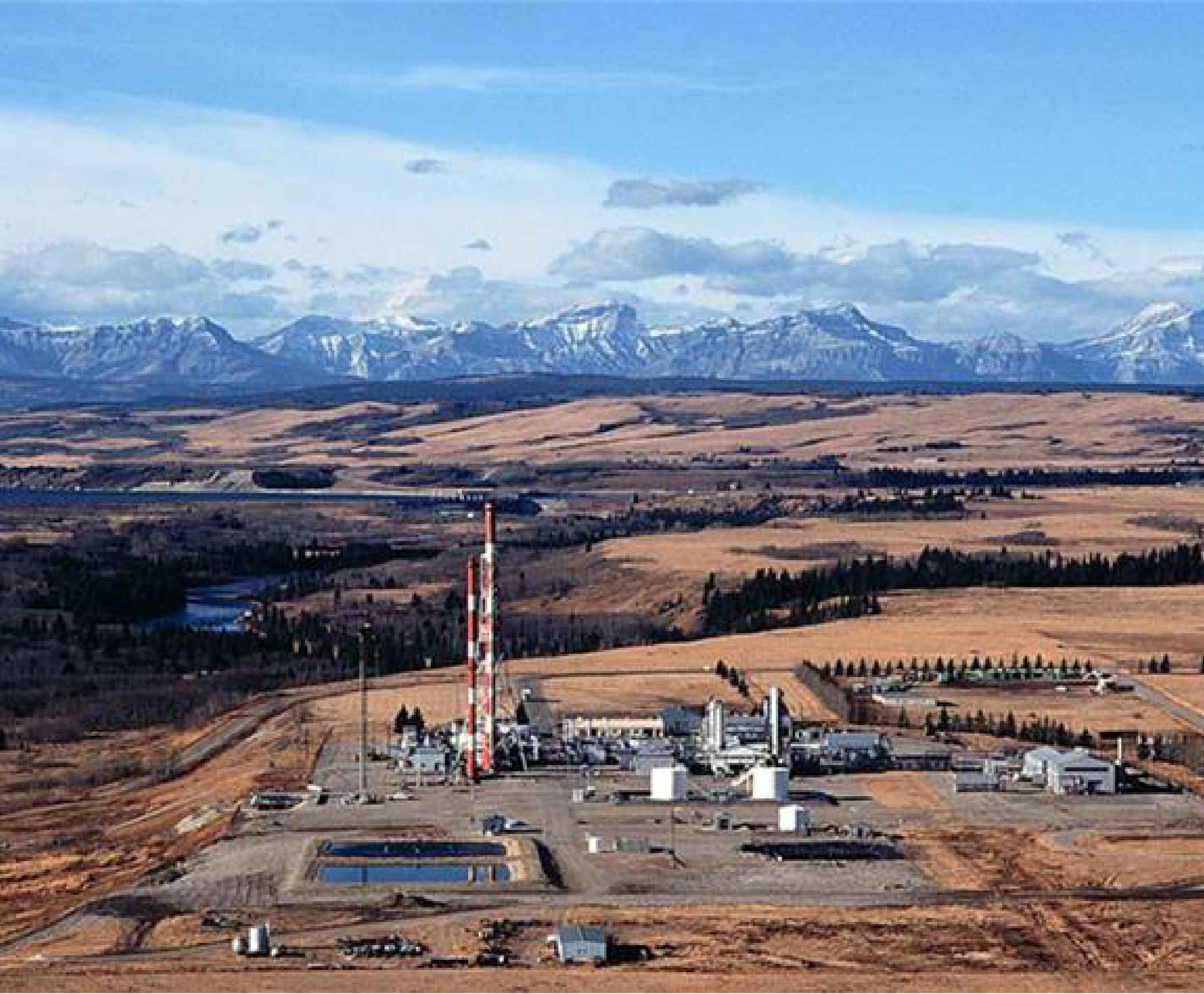
Alberta's energy sector recovers elemental sulphur as a co-product of natural gas processing in substantial volumes every year. The challenge has been timing. Conventional elemental sulphur particles — typically 80 to 200 microns in diameter — oxidize slowly in soil, often taking months to years to become plant-available. By the time sulphate reaches the root zone, the crop that needed it has already passed its critical growth window. Applied late, it accumulates as a soil reserve rather than delivering the in-season performance farmers are paying for.
Sultech's patented micronization technology solves that timing problem. By reducing elemental sulphur to particles below 30 microns, oxidation accelerates dramatically, delivering plant-available sulphate within the growing season in which it is applied. The result is a product that performs like synthetic sulphate, without the energy-intensive production footprint, and from a domestic feedstock that eliminates the supply chain risk associated with imported alternatives.
An independent Emissions Reduction Alberta Greenhouse Gas Quantification Assessment confirmed the climate case: replacing conventional ammonium sulphate with SulGro generates an emission reduction of approximately 1.2 tonnes of CO₂e per tonne of sulphur produced, with Alberta market-level reductions projected to exceed 867,000 tonnes of CO₂e by 2030.
Canadian and global food security depends on productive soils, efficient inputs, and supply chains that don't depend on geopolitical goodwill. The science increasingly points to balanced nitrogen and sulphur nutrition as one of the most practical and underutilized levers available.
Sultech's technology, built on Canadian feedstock, validated by independent research, and designed to scale, can play a significant role in a more resilient future.
Sultech is also bringing this science to the policy table. Brad Fournier, Sultech’s Vice-President, Strategic Partnerships, serves on the Fertilizer Canada Technical Committee — the industry body that represents producers, manufacturers, and distributors of nitrogen, phosphate, potash and sulphur fertilizers, and whose members contribute over $42 billion annually to Canada’s economy. In October, Brad will present at FertilizerCanada’s Policy & Products Forum in Ottawa, where he will propose a national research initiative to replicate nitrogen-sulphur (NxS) optimization trials currently underway in the United States. The premise is straightforward: with more than 80 percent of the world’s soils now considered sulphur-deficient, and nitrogen remaining both the most expensive input and a known emissions risk when over-applied, finding the optimal balance between the two nutrients could unlock significant gains in yield, cost efficiency, and environmental performance across a range of crops and regions. Sultech will be commencing its own NxS trials in Alberta as a first step.
At the federal level, the conversation is accelerating. Fertilizer Canada is actively engaging its members on Canada’s Food Security Strategy, the Fresh Water Strategy, and the Soil Health Framework — a suite of federal initiatives that collectively define what sustainable, high-output agriculture looks like in this country. In September 2026, Prime Minister Mark Carney called for Canada and the United States to work toward a more self-reliant North American fertilizer bloc, with closer cooperation across potash, ammonia and other crop nutrients. Sulphur —and the technology to make it perform — is part of that equation.
The molecule has always been here. Now it can do the work.
Sources
Dyck, M.F. etal. (2016). 4R Nutrient Stewardship: Nutrient Supply and GHG Emissions from aS-deficient Soil as a Function of Fertilization History. Canadian FertilizerInstitute.
BrightspotClimate Inc. (2024). ERA Greenhouse Gas Quantification Assessment Report —IT0163232 Sultech. Emissions Reduction Alberta.
FertilizerCanada 4R Research Network (2016). fertilizercanada.ca/4r-stewardship.
Solberg, E.D.et al. (2005). Cited in ERA GHG Assessment: sulphur-deficient prairie soilsestimate.
The SulphurInstitute. sulphurinstitute.org.




.svg)